The NHS Modernisation Bill arrived in the King’s Speech in May 2026 and for anyone working in or alongside Integrated Care Boards, it marks one of the most significant structural shifts the NHS has seen in years.
For CAMHS services and the professionals who staff them, the implications go beyond governance. Decisions made during this restructure will shape how mental health services for children and young people are commissioned, funded, and delivered for the next decade.
Here’s what the Bill actually says and what it means in practice.
What Is the NHS Modernisation Bill?
The NHS Modernisation Bill is the government’s primary legislative vehicle for restructuring how the NHS in England is organised and governed. Announced in the King’s Speech 2026, it builds on the 10 Year Health Plan and the government’s commitment to reduce NHS bureaucracy, shift care into the community, and clarify accountability across the system.
At its centre is the formal abolition of NHS England as a statutory body. Functions currently held by NHS England will return either to the Department of Health and Social Care (DHSC) or be devolved to a smaller number of Integrated Care Boards.
What the Bill Means for ICBs
ICBs are being significantly reduced in number
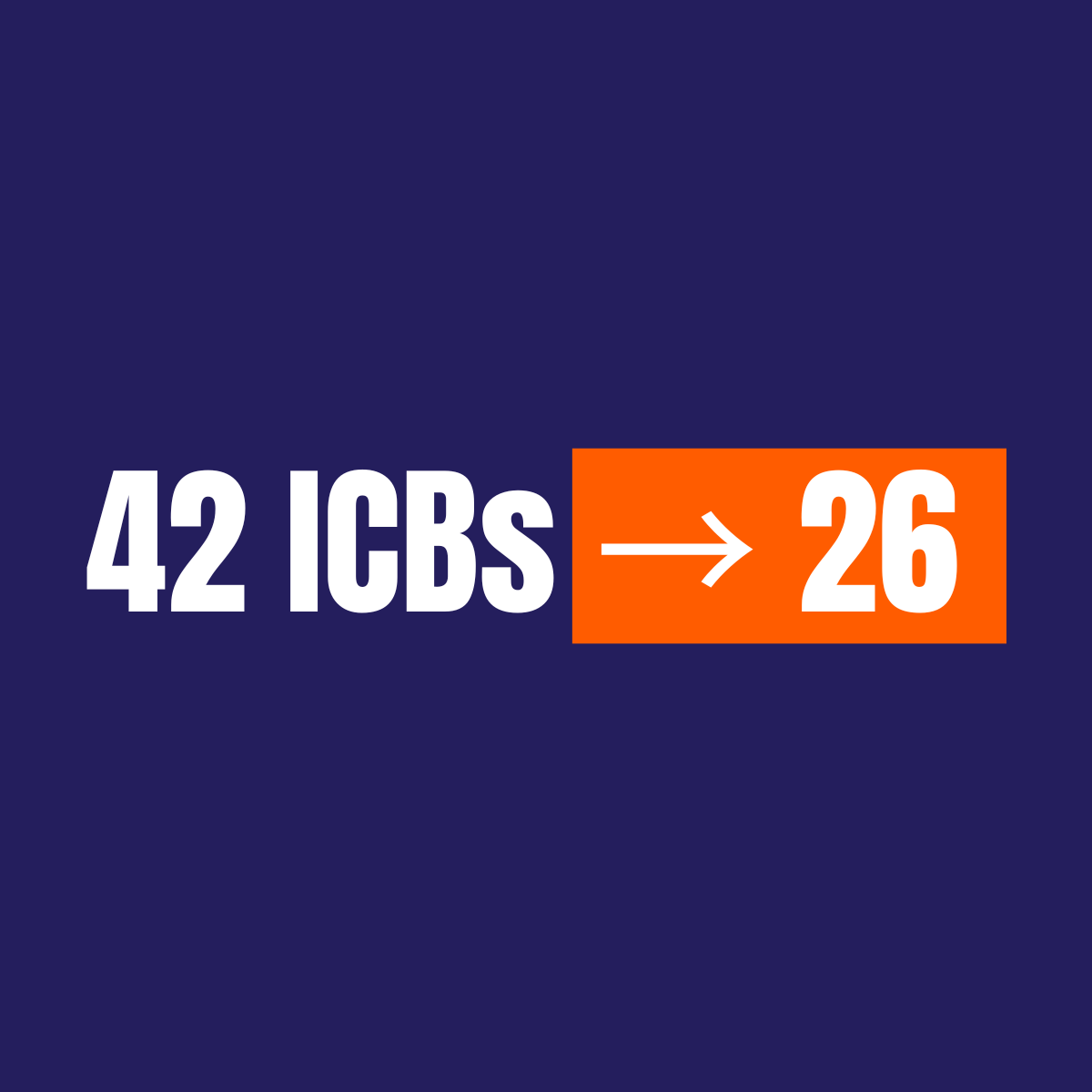
The Bill legislates for a consolidation of ICBs from 42 to approximately 26. The first wave of mergers took effect in April 2026, covering London, the East of England, and the South East. A second wave is expected to complete by April 2027.
This isn’t just about fewer leadership teams, it’s a fundamental reshaping of commissioning geography. Larger ICBs will cover bigger populations, take on more accountability, and operate with substantially reduced running costs compared to the combined overhead of the boards they replace.
Accountability is shifting upward, and downward
With NHS England abolished, ICBs will no longer be directly accountable to a national arm’s-length body. Accountability moves in two directions simultaneously: upward to the Secretary of State for Health and Social Care, and downward in the form of expanded commissioning responsibilities.
New financial provisions in the Bill include a ‘backstop’ power for the Secretary of State to set limits on ICB revenue spending, giving central government more direct leverage over local commissioning decisions than has existed since the creation of clinical commissioning groups.
ICBs are becoming full strategic commissioners
One of the Bill’s most significant provisions is the transfer of commissioning responsibilities to ICBs that were previously held nationally. This includes primary care, dentistry, ophthalmology, and pharmacy, areas that ICBs have historically had limited control over.
The exception is highly specialised services. Commissioning for services such as high secure mental health will transfer to DHSC rather than to ICBs.
For most mental health services, including CAMHS, ICBs will be the decision-makers.
Board membership is changing
The Bill also reforms how ICB boards are constituted. Provider organisations; including NHS trusts, NHS foundation trusts, and primary care providers, will no longer sit as members on ICB boards. Strategic authority mayors will be included instead, reflecting the Bill’s emphasis on alignment with local government and devolution agendas.
The statutory requirement for Integrated Care Partnerships is being removed, replaced with more flexible planning frameworks at neighbourhood and strategic level.
What This Means for Mental Health and CAMHS Commissioning
ICBs are already the main buyers of CAMHS provision
Before the Bill was introduced, ICBs had already become the primary commissioners of NHS mental health services across England. The Bill formalises and extends this role. Larger, more powerful ICBs mean that commissioning decisions will be taken at greater geographic scale, with implications for how local CAMHS pathways are designed and resourced.
The Mental Health Investment Standard has not been recommitted to
This is the most significant concern for mental health services in the Bill’s current form.
The Mental Health Investment Standard (MHIS) which required ICBs to increase their mental health spending at least in line with overall NHS funding growth has not been recommitted to in the Modernisation Bill. Previous guidance stated this was an expectation for all ICBs. That expectation has now been quietly removed.
What this means in practice: ICBs have greater flexibility to set local investment levels. Historically, when that flexibility has existed, mental health services and CAMHS in particular have been disproportionately affected by reprioritisation.
The MHIS wasn’t a perfect mechanism, but it provided a floor. Without it, commissioning intentions matter more, and advocacy for sustained CAMHS investment matters more.
Neighbourhood and place-based care creates opportunity
The Bill explicitly frames the new ICB model around neighbourhood and place-based care. Flexible planning at neighbourhood level rather than the previous statutory ICP structure opens space for more localised, community-centred commissioning.
For CAMHS, this is meaningful. The shift toward school-based support, digital therapy platforms, family-centred approaches, and early intervention aligns with how commissioners are already trying to move. A place-based framework supports that direction, provided ICBs choose to prioritise it.
Larger ICBs mean longer procurement cycles
The practical reality of larger commissioning organisations is longer decision-making chains and more complex procurement landscapes. Services and providers that relied on close relationships with local commissioners will need to adapt to a new scale of engagement.
Workforce planning will be affected too. ICBs managing bigger, more complex footprints will have more variables to account for and less tolerance for gaps in staffing that create local pressure.
What Happens Next?
The Bill is currently progressing through Parliament. Key developments to watch:
- April 2027 Second wave of ICB mergers completing
- Ongoing Decisions on the transfer of commissioning functions to ICBs (primary care commissioning transfer has already been delayed to 2027)
- Parliamentary scrutiny Mental health stakeholders and royal colleges are likely to push for reinstatement of the MHIS commitment during the Bill’s passage
The King’s Fund has noted that the Bill represents one of the most substantial NHS restructures in recent years, and that the pace of change creates real implementation risk. NHS Confederation guidance on ICB clusters and mergers emphasises the importance of continuity planning during transition.
What This Means for CAMHS Workforce Planning
Structural change at ICB level doesn’t pause the need for safe, staffed services.
During merger periods, commissioning decisions slow. Leadership capacity is absorbed by transition. Procurement frameworks change. And in the middle of all of that, CAMHS wards and community teams still need skilled clinicians,, nurses, therapists, psychiatrists to show up and deliver care.
Workforce stability during system change isn’t a secondary concern. It’s what keeps services running while the restructure works itself out.
At CAMHS Professionals, we work solely within child and adolescent mental health services. We understand which ICBs are merging, what that means for the trusts we work with, and how to plan staffing around commissioning uncertainty rather than against it.
If you’re a workforce lead or service manager navigating ICB transition and want to think through what it means for your staffing, we’re here.
Summary: Key Points from the NHS Modernisation Bill for ICBs
- ICBs are being reduced from 42 to approximately 26, with mergers in April 2026 and April 2027
- NHS England is being abolished; accountability shifts to DHSC and to ICBs
- ICBs become full strategic commissioners for most services, including mental health
- Highly specialised commissioning (e.g. high secure mental health) moves to DHSC
- The Mental Health Investment Standard has not been recommitted to in the Bill
- Neighbourhood and place-based care frameworks create opportunity for community CAMHS
- Larger ICBs mean more complex procurement and longer decision cycles
- Workforce continuity during transition is critical for CAMHS services
CAMHS Professionals is the UK’s first and only staffing provider dedicated solely to child and adolescent mental health services. We place registered nurses, therapists, support workers, and psychiatrists into CAMHS settings across England.